Otto
A terminal AI agent that works on a codebase, a container, a browser or a desktop, uses what it built, and judges its own work against criteria it wrote before it started. One agent loop with modes over four model vendors, a rubric-first evaluator, tiered memory, six benchmark harnesses, and 1,593 tests that need no API key.
Source on GitHub · Latest release · Watch it run (mp4)
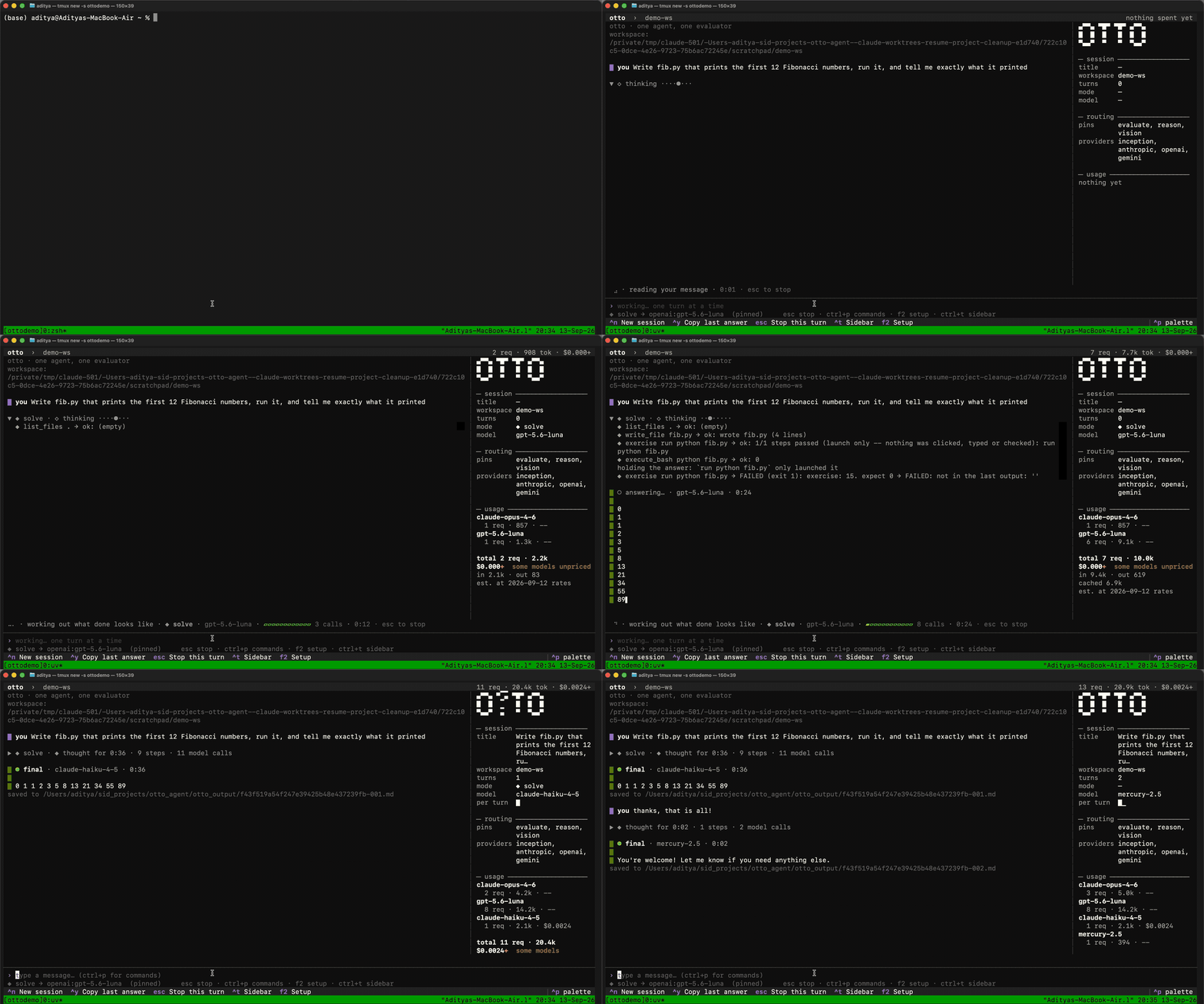
Install
pip install otto-cli-agent
otto doctor
otto tui
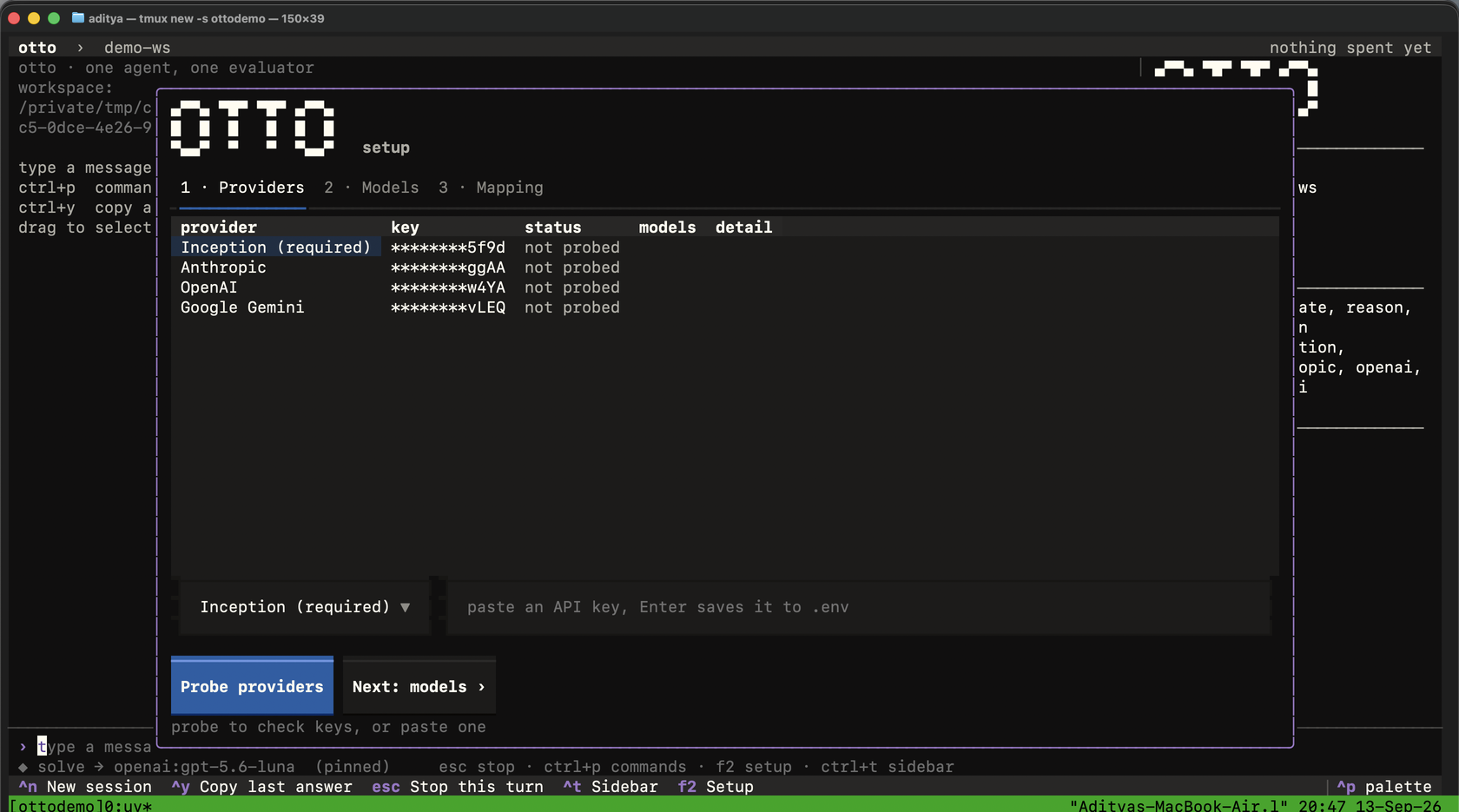
INCEPTION_API_KEY is required; OpenAI, Anthropic and Gemini keys are
optional and each unlocks the seats routed to that vendor. otto tui opens
its setup screen on first start when nothing is configured.
What it does, measured
| property | measured |
|---|---|
| One agent loop with modes, no node boundaries | a one-tool task costs 3 model calls; overhead is flat in the length of the work |
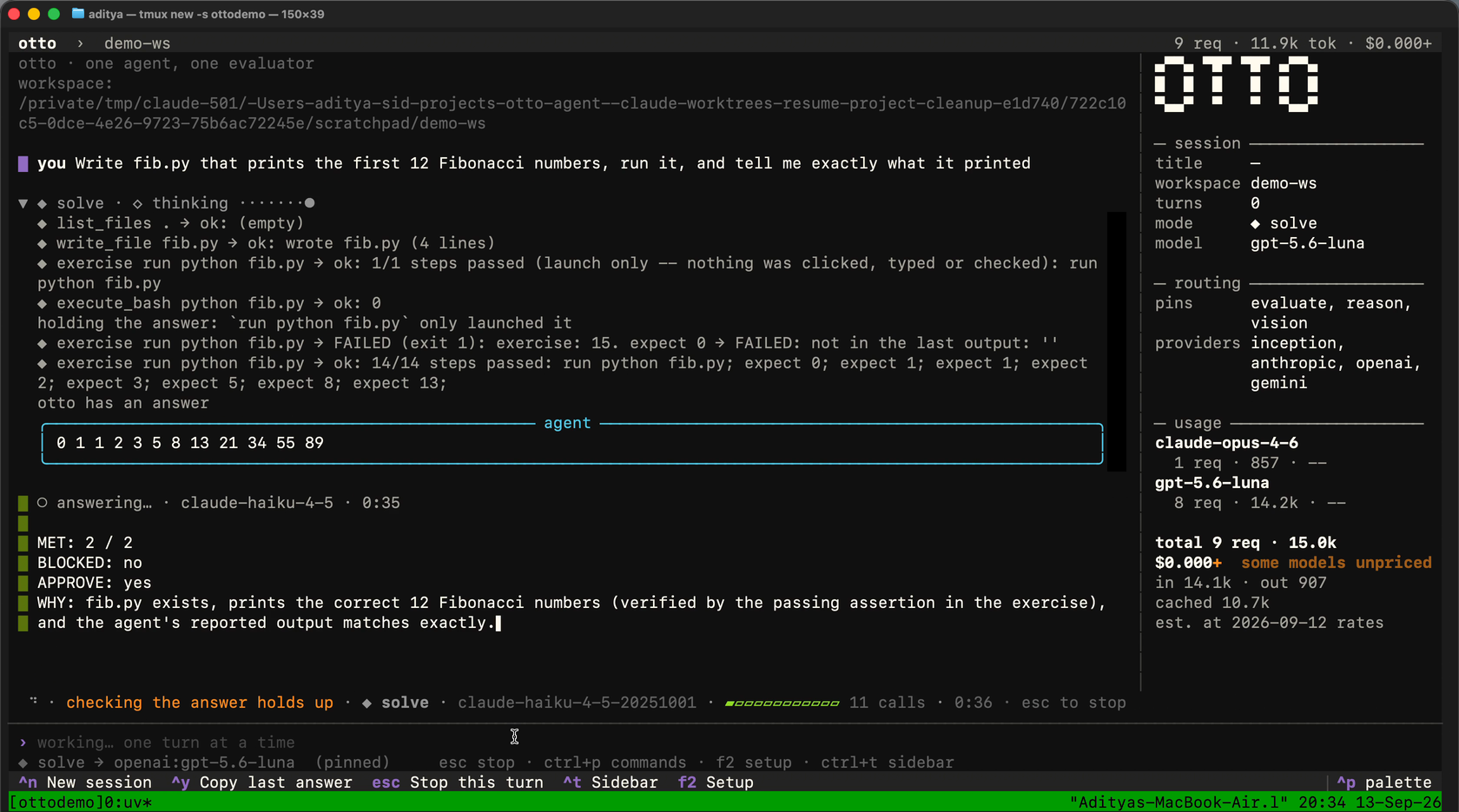
| Criteria written from the task before any attempt, shared by the loop and the judge | a write-and-run task judged in 7 calls and 31 s, approved first time |
| A mutation gate held once before an irreversible action | Claw-Eval T026 scores 0.955 with safety 1.0 |
| Type-aware compaction: what the person said is never summarised | 8/8 planted constraints kept at 120 and 400 turns |
| Two-stage semantic recall over a content-addressed store | LoCoMo recall 96% at about 2,600 tokens per query |
| A greeting has no criteria, so it skips the loop | “hi otto!” costs 2 model calls |
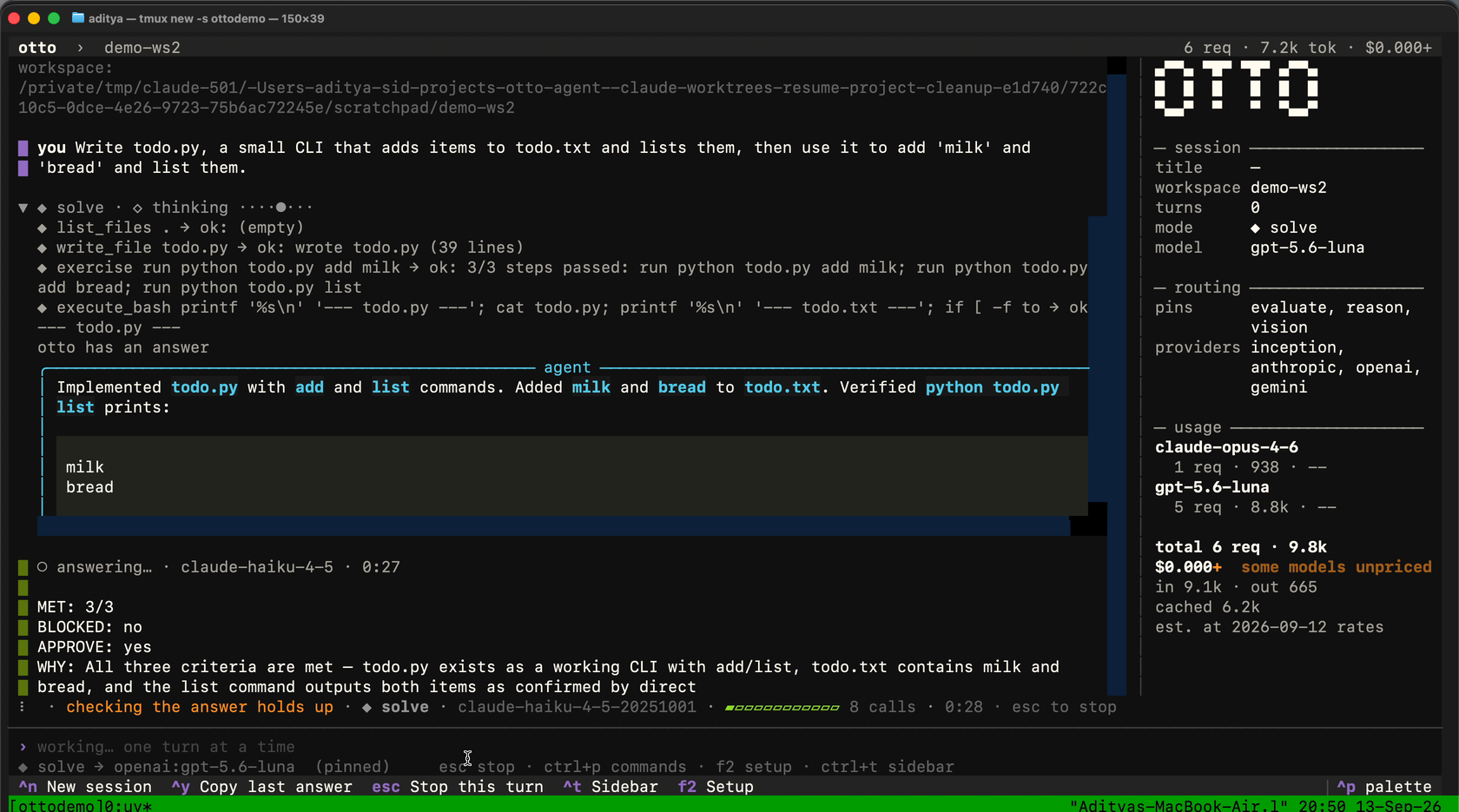
exercise: the agent uses what it built and the judge reads a code-written report |
five of five runs walk through what they built before finishing |
| Golden set of 20 code, math and NP-hard tasks with real checkers | 20/20 |
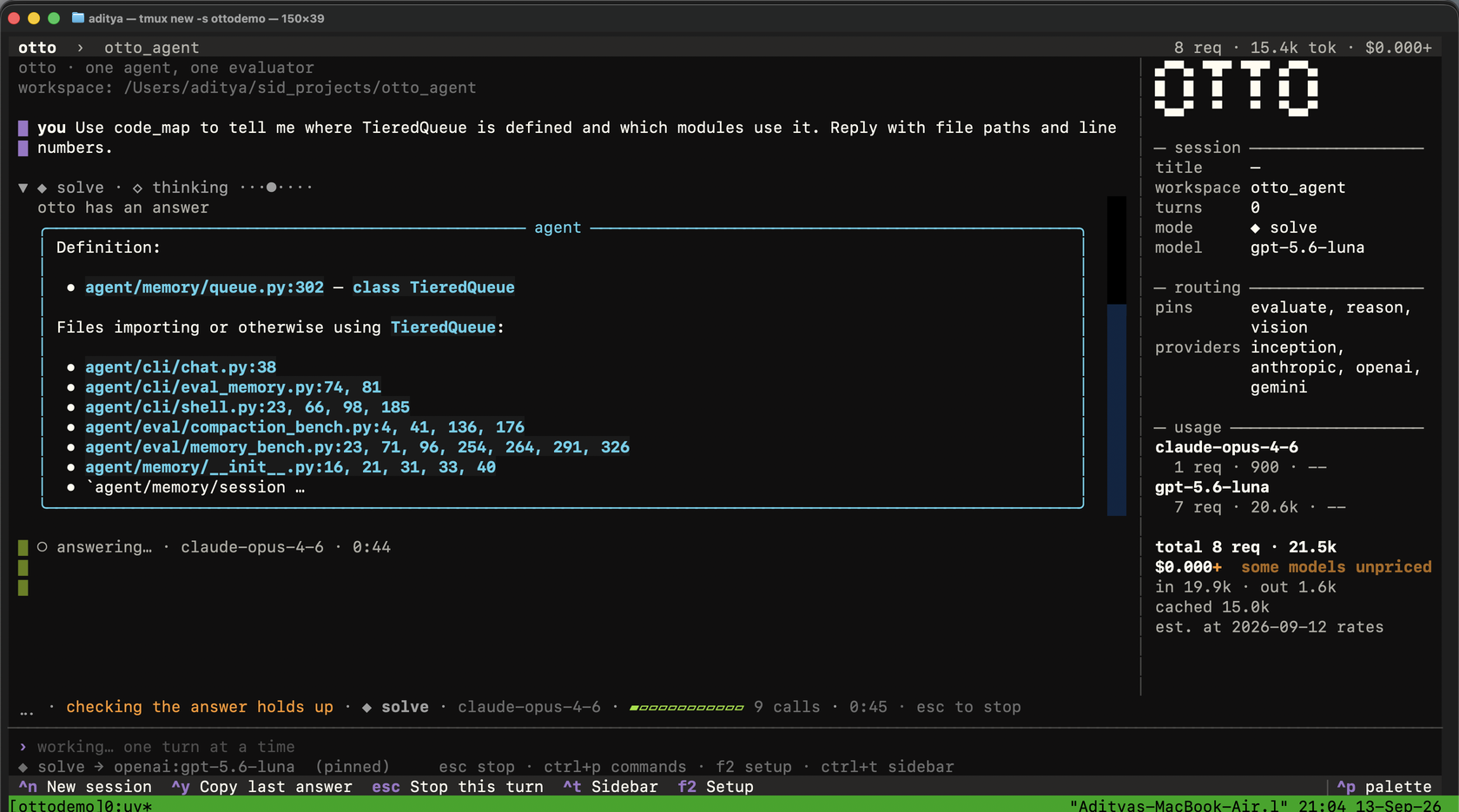
Screenshots
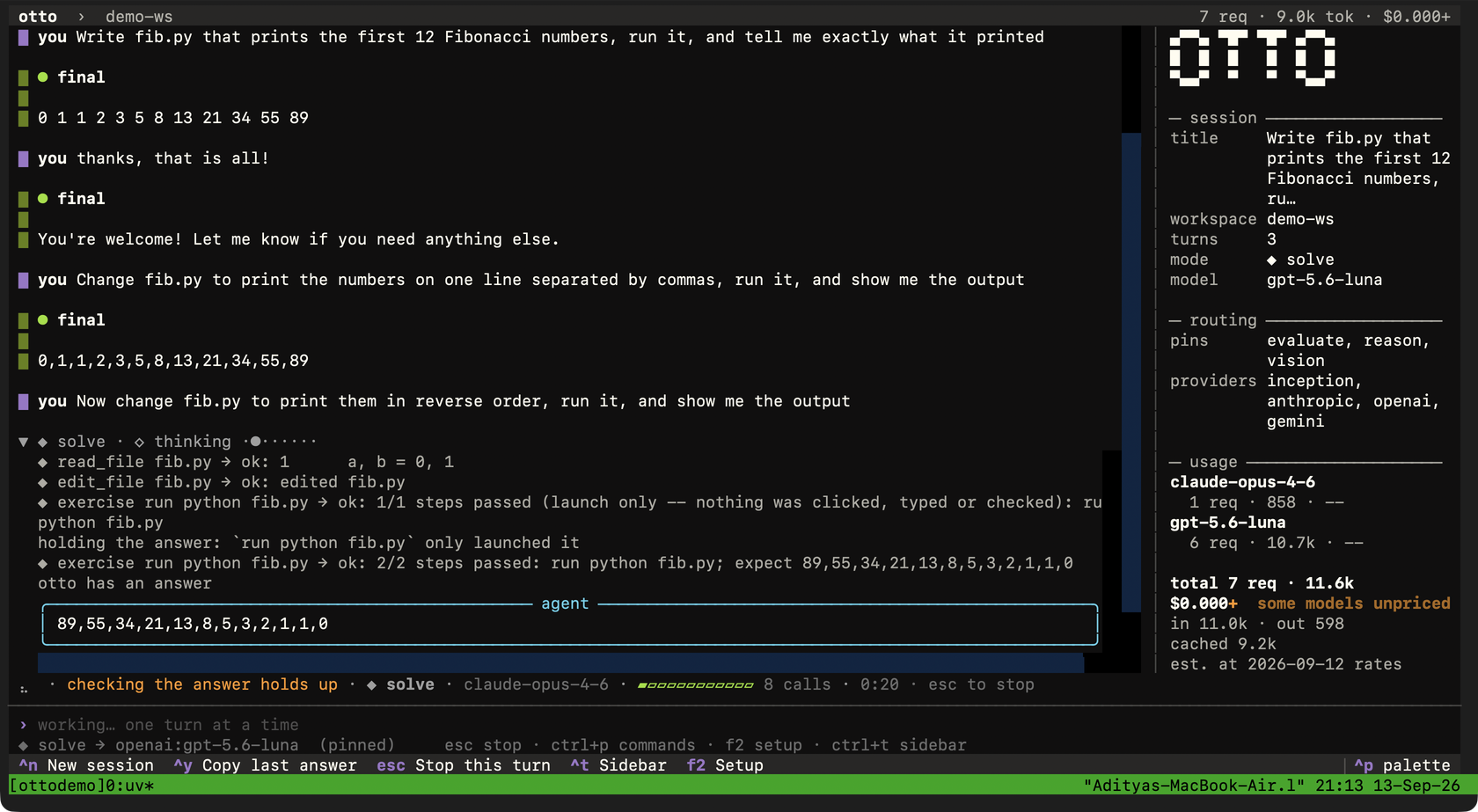
Each one is a real run, captured while the thinking block was open.
Read more
- How it works, folder by folder
- The development log: every commit and the measurement behind it
- The research each design decision draws on
- The memory design and its measurements
MIT licensed. Built by Siddharth Priyadarshi.